Stock Status: Temporarily out of stock. To be ordered in from the Publisher
Published 2026.
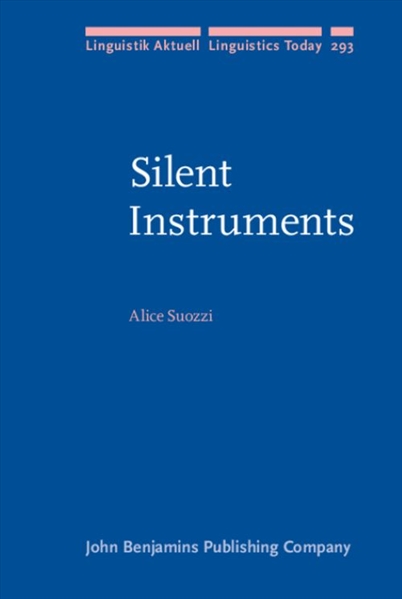
This book offers the first systematic investigation of the instrumental role across syntax, semantics, and language acquisition. Focusing primarily on Italian within a comparative perspective, the book addresses a long-standing puzzle: why Instruments ...
Published 2026.
This book offers the first systematic investigation of the instrumental role across syntax, semantics, and language acquisition. Focusing primarily on Italian within a comparative perspective, the book addresses a long-standing puzzle: why Instruments can be syntactically omitted even when they remain semantically present.
Combining theoretical analysis with experimental evidence, corpus data, and innovative methodologies, the study redefines the status of Instruments with respect to the argument-adjunct distinction and introduces a new, principled account of their syntactic omission based on semantic recoverability. It proposes a refined typology of Instruments, grounded in verb meaning and contextual factors, and tests its predictions through behavioural experiments and large-scale corpus analyses.
The book also breaks new ground in acquisition research, presenting the first experimental investigation of how Italian-speaking children acquire Instruments. The results reveal a striking dissociation between early syntactic mastery and the slower development of Instrument semantic recoverability, shedding new light on the acquisition of syntactically optional elements.
By integrating syntax, semantics, and acquisition, Silent Instruments provides a robust and empirically grounded framework that is readily applicable to cross-linguistic research and to other phenomena at the syntax-semantics interface. It will be of interest to linguists working on argument structure, optionality, language acquisition, and experimental and corpus-based approaches to grammar.